
Reimagining Mobile Medicine
HOPICS, Akido, and Future Communities Institute have partnered to deliver healthcare where it's needed most: directly to people experiencing homelessness in South Los Angeles. This partnership demonstrates how community outreach, clinical innovation, and research capacity can integrate to create sustainable, scalable models of care.
The Challenge
Over 20,000 clients served by HOPICS face housing instability alongside significant unmet medical and behavioral health needs. These individuals represent one of California's highest healthcare-cost populations: more than half of Medi-Cal spending is attributed to the 5 percent of members with the highest-cost needs, due to underutilization of preventive care leading to high rates of emergency department utilization and hospitalizations. People experiencing homelessness typically live with multiple complex conditions involving physical, behavioral, and social needs, but because of systemic barriers to ongoing care, health maintenance gets crowded out by urgent problems.
HOPICS built Los Angeles’ strongest frontline operations through decades of relationship-building with people experiencing homelessness. But identifying healthcare providers able to meet the demand for care and willing to meet clients where they are is a challenge.
The Solution: A partnership
The partnership between HOPICS, Akido Labs and Future Communities Institute has addressed this challenge, developing a sustainable care model designed to scale to meet the care need in the region.
This collaboration celebrates each organization’s strengths:
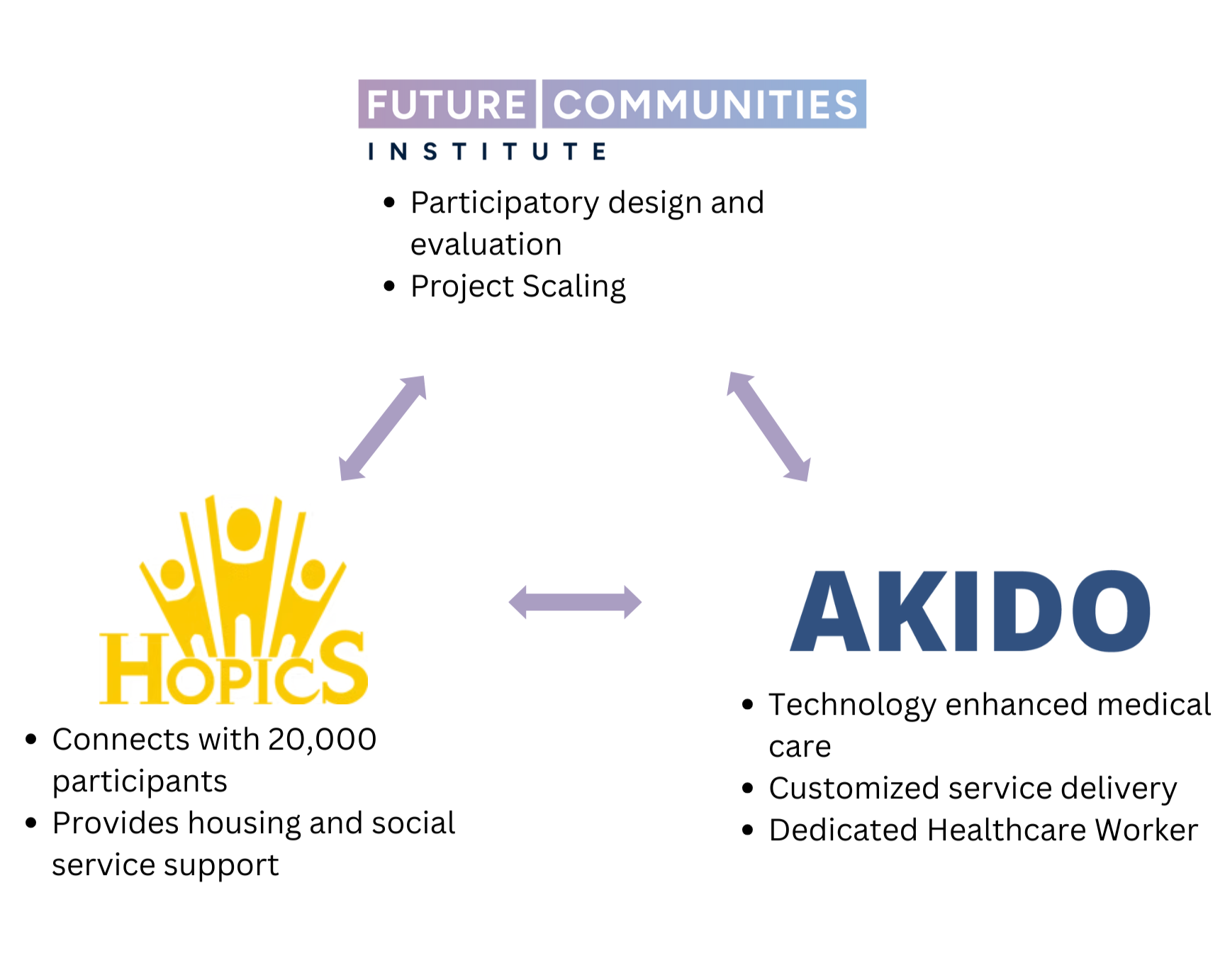
HOPICS (Homeless Outreach Program Integrated Care System) operates one of the largest street outreach networks in South Los Angeles, with many staff members bringing lived experience of homelessness. Within the partnership HOPICS connects its beneficiaries and staff with health services provided by Akido while providing community support that address health-related social needs like housing and food access.
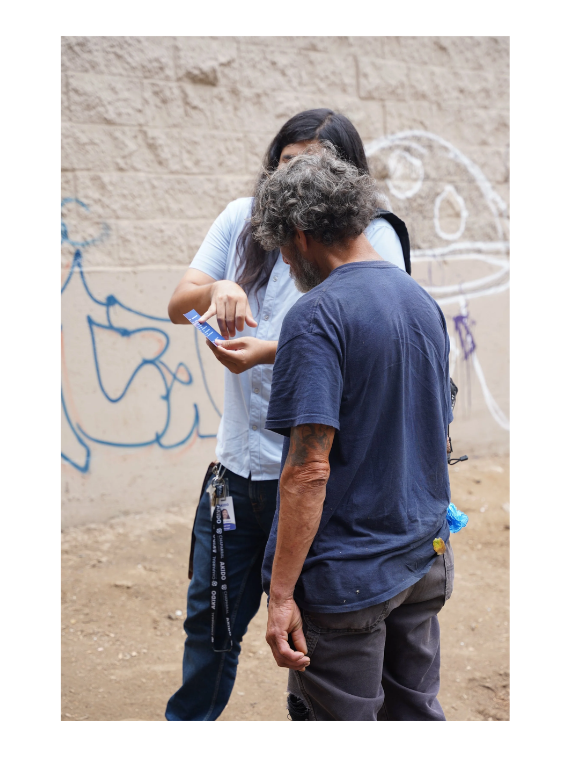
Akido Labs delivers comprehensive primary care, behavioral health, and substance use disorder treatment directly to patients, breaking care barriers typically experienced through traditional brick and mortar clinics. Through a combination of mobile teams and telehealth, Akido brings care directly to the streets, building trust and establishing long-term care relationships with patients, rather than waiting for them to navigate traditional medical systems. As an Enhanced Care Management (ECM) provider, Akido serves as lead care manager, coordinating all health and health-related care making it easy for patients to receive whole-person care.
Future Communities Institute serves as a backbone organization, the connective tissue aligning partners around shared goals. They use participatory design and evaluation processes to ensure that beneficiary voice is centered and programs are created to respond to the communities’ specific needs. FCI serves as a program evaluator, reporting on outcomes and amplifying results so that other communities can learn and implement a similar structure.
How it Works in Practice
In this partnership, each organization contributes distinctive expertise. HOPICS leverages their longstanding relationships in the community by connecting clients and staff to Akido for medical care while providing support to their clients for various social services. Akido provides low barrier, no cost medical care that meets patients where they are. As well as reducing administrative and health coordination burden on patients by providing dedicated Health Care Workers for each patient. FCI facilitates coordination between partner organizations, leads evaluation and research, amplifies results through convenings, presentations and press strategies, and documents lessons to help other communities learn, adapt and expand.
Impact to Date
The partnership has achieved measurable results:
Approximately 2,000 HOPICS patients served.
Clients often self-present when Akido teams arrive on-site, evidence of trust spreading through community networks.
Roughly 10 percent of HOPICS staff have received healthcare support.
Established a replicable model that has been adopted by other Los Angeles organizations.
This project is expected to expand to 20,000 clients, ultimately serving all of HOPICS participants.